
Two Minutes, No Warrant: The Border Phone Search Ruling, Explained
A federal appeals court says CBP can hand-search any phone at the border with zero suspicion. The case that set the rule isn't the one most coverage describes.
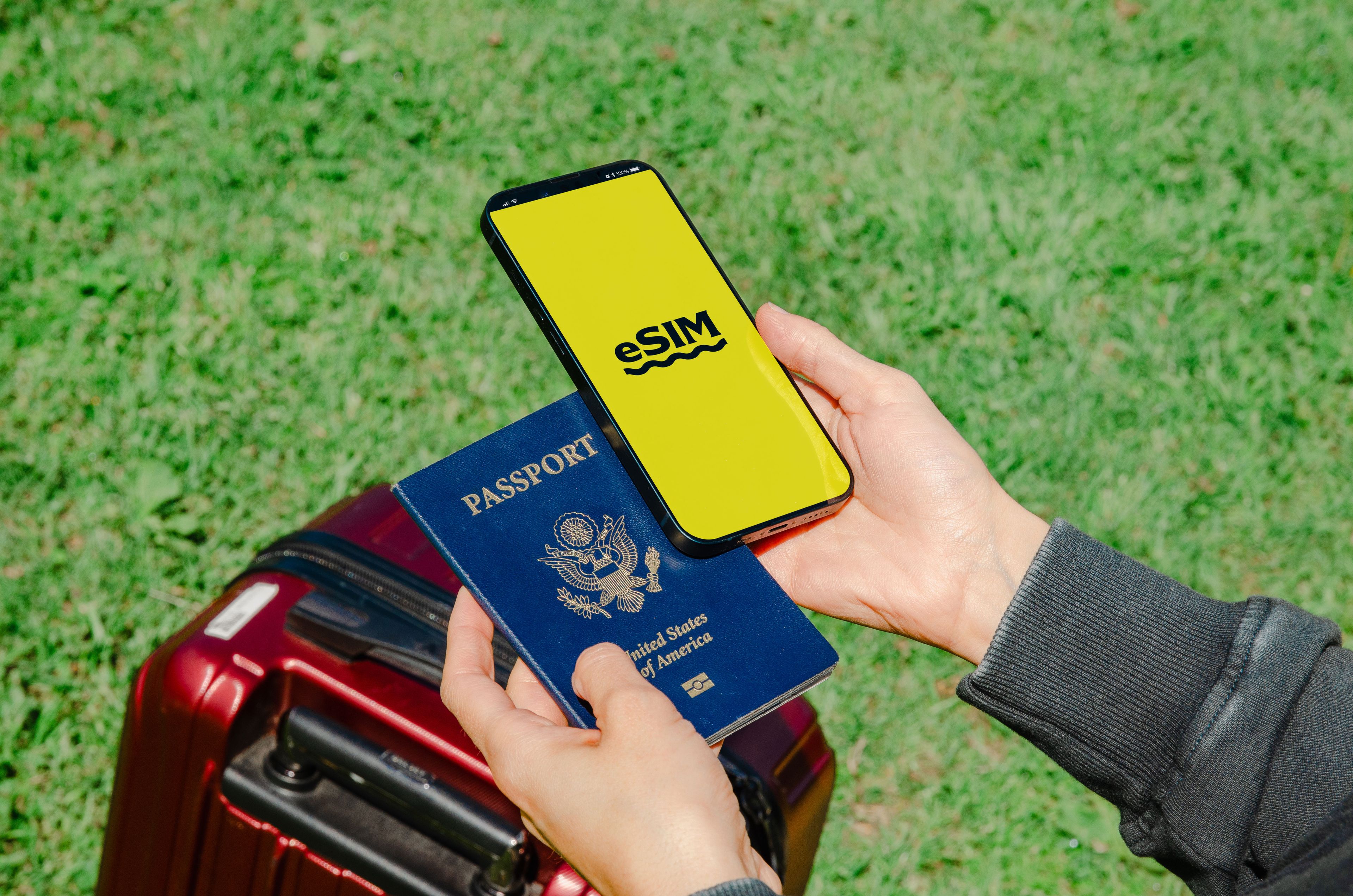
Jose Belmonte Cardozo landed at Washington Dulles International Airport on May 8, 2024, coming home from Bolivia. A Customs and Border Protection intelligence officer named Sara Oliphant was waiting for him. She asked him to unlock his two iPhones. He did. She opened the photo galleries, then toggled into a hidden folder that required re-entering his passcode. About two minutes after taking the phones, she found what she was looking for.
That two-minute search is now the reason U.S. Customs and Border Protection can scroll through any traveler's phone at the border — citizen or not, suspected of anything or nothing — without a warrant. On July 13, the Fourth Circuit Court of Appeals ruled in United States v. Belmonte Cardozo that manual phone searches at the border are "routine," the same legal category as opening a suitcase, and therefore require no individualized suspicion at all.
What the Court Actually Held
The ruling, read in full, resolves a question the same court had explicitly left open since 2018. In United States v. Kolsuz, the Fourth Circuit held that forensic searches — plugging a phone into extraction hardware that copies its entire contents — require "some measure of individualized suspicion" because of how much data they pull. What it never decided was whether a manual search, an officer just scrolling with their thumbs, deserved the same protection.
Judge Marvin Quattlebaum wrote the answer for a unanimous panel that also included Chief Judge Albert Diaz and Judge G. Steven Agee: no. The opinion leans on four distinctions — a person searches instead of a machine, the search is limited by the officer's patience, it surfaces only what an ordinary user could find, and it leaves no permanent copy. Four other circuits had already reached the same conclusion for their own jurisdictions, so the Fourth Circuit's decision closes one more region of the country under a rule that now covers most of the federal map, including Ninth and Eleventh Circuit territory that went even further and allows suspicionless searches of both kinds.
The Case Nobody Would Have Picked
Here's where the coverage starts to diverge — not in what's reported, but in what gets emphasized. The Electronic Frontier Foundation, which filed a joint amicus brief with the ACLU and the National Association of Criminal Defense Lawyers, frames the ruling almost entirely around what it means for the next traveler: "extraordinarily invasive electronic device searches without any suspicion of wrongdoing." That's an accurate description of the legal rule. It says almost nothing about who Belmonte Cardozo actually was.
He wasn't a random traveler. CBP flagged him before he landed. And what Officer Oliphant found in that hidden folder was child sexual abuse material, leading to his conviction on multiple federal counts and an 18-year sentence. Tech Times is the one outlet that leads with this directly, noting flatly that "the facts of the case are not sympathetic to the defendant" before explaining why the ruling still matters for everyone else. Most shorter coverage skips straight to the "your phone" framing without ever mentioning what was on Belmonte Cardozo's.
That gap matters both ways. It doesn't make the Fourth Amendment question less serious — the court's rule applies to every traveler regardless of what's on their phone, and the opinion itself takes pains to say general, non-criminal privacy interests were weighed and lost. But a legal rule forged in the least sympathetic circumstances imaginable is also the hardest one to challenge later, and outlets that strip out the CSAM finding are handing readers a cleaner, scarier story than the record supports.
There's a smaller, more mechanical divergence too. Bloomberg Law's write-up states that "Judge Albert Diaz wrote for a three-judge panel." The published opinion says otherwise: Diaz was the chief judge on the panel and joined the ruling, but Judge Quattlebaum wrote it. It's a minor error, but it's the kind that shows how quickly wire-style legal reporting gets copied forward without a second read of the source document.
The Loophole the Court Left Standing
The angle most coverage undersells is the one EFF's own analysis gets closest to: the four-factor test the court used to distinguish "routine" manual searches from "nonroutine" forensic ones is already out of date. The court reasoned that manual searches are limited because an officer can only look at what a normal user could find, constrained by "time, patience and attention." But modern phones now include AI-powered photo search and keyword search across messages and email that can surface someone's entire communication history with a single query — no forensic hardware required. An officer who types a name into an iPhone's search bar isn't limited by patience anymore.
That creates a plain incentive: agents who want deep access to a phone without meeting any constitutional threshold can simply choose to search by hand instead of connecting extraction tools. The Center for Democracy and Technology frames the bigger picture well: depending on which airport a traveler lands at, they now face one of at least six different legal standards for how their device can be searched, because the Second Circuit still hasn't ruled and district courts within it are split.
One thread almost nobody outside legal press picked up: the Knight First Amendment Institute at Columbia and the Reporters Committee for Freedom of the Press also filed as amici in this case, alongside the ACLU and EFF — a sign that press-freedom groups see the same ruling as a direct threat to journalists carrying source communications across a border. None of the general coverage mentions their involvement at all.
The pattern of a privacy erosion arriving through the least sympathetic possible case, then getting applied broadly to everyone else, isn't new to this term. It's the same dynamic that played out when a Canvas cyberattack exposed how little control students actually had over where their academic data lived — the initial incident is narrow, but the exposure it reveals is not.
For now, the rule is simple and uneven: land at Dulles, Reagan National, or Charlotte Douglas, and CBP can scroll your phone by hand with no suspicion required. Land in New York, and the rules are still being argued. The Supreme Court has had chances to settle this nationally and has taken none of them.
Sources & Further Reading
- United States v. Belmonte Cardozo, No. 25-4239 (4th Cir. July 13, 2026) — U.S. Court of Appeals for the Fourth Circuit, official opinion
- The Fourth Circuit Says Border Agents Can Search Your Phone By Hand, No Suspicion Required — Electronic Frontier Foundation
- CBP Can Rifle Through Your Phone by Hand at the Border: No Suspicion Required — Tech Times
- Fourth Circuit Holds Manual Cellphone Searches at Border Routine — Bloomberg Law
- No Warrants and Half a Dozen Different Rules: The Convoluted and Dangerous Status of the Border Search Exception — Center for Democracy and Technology
- courts
- law
- tech
- civil rights
- privacy
Related stories
Why Flock's Camera Backlash Now Spans the Political Spectrum
Flock announced new safeguards for its license-plate camera network this week. Coverage splits between a PR reset, a consumer tool, and a regulatory vacuum no policy tweak can fix.
Read the story
ICE Tracked a Man for Months Over an Email It Won't Call a Threat
DHS agents tracked a Rochester man across three states over a scathing email to ICE's chief. In court filings, they still won't call it a threat.
Read the story
Mangione's Anonymous Jury: The Fact Most Coverage Buried
A judge ordered an anonymous jury for Luigi Mangione's murder trial. Coverage split between 'Free Luigi' spectacle and a prosecutor's warning most outlets buried.
Read the story