
Why Flock's Camera Backlash Now Spans the Political Spectrum
Flock announced new safeguards for its license-plate camera network this week. Coverage splits between a PR reset, a consumer tool, and a regulatory vacuum no policy tweak can fix.
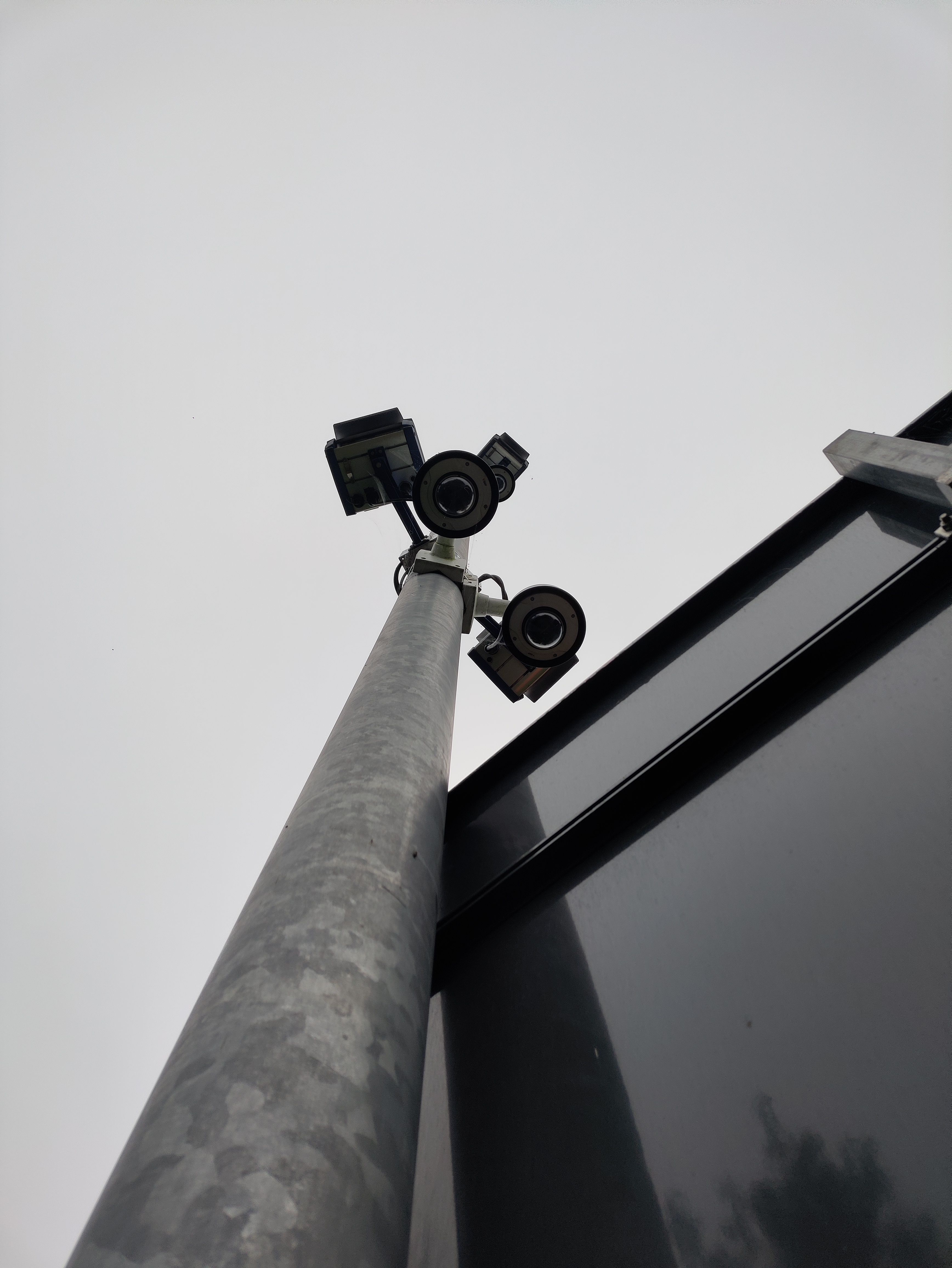
Roughly 120,000 automated cameras mounted on poles in every state but Alaska photograph license plates and feed them into a searchable database. Until this year, most Americans didn't know the network existed. Now the company that built it, Flock Safety, is on the defensive, and the coverage of that defense splits into three barely-overlapping stories depending on which outlet you read.
A Website Lets You Check Yourself
The most-clicked version of this story right now isn't about policy at all. It's a tool. HaveIBeenFlocked.com, a nonprofit-funded project, lets anyone type in a license plate and see whether it's shown up in Flock's audit logs — CBS News reported the site has compiled 4.6 million plate records from roughly 242 million searches, sourced from public-records requests and government transparency portals.
CBS's framing is practical and consumer-facing: here's a tool, here's how it works, here are its limits. And those limits are real. The site doesn't show whether cameras captured your plate — only whether someone searched for it — and there can be a lag of "months or even years" between a search and its appearance in the database, per the site's own FAQ. That caveat matters, but it's also where local coverage tends to stop, treating Flock as a curiosity to check rather than infrastructure to interrogate.
Flock's CEO, Garrett Langley, leaned into that same framing in an interview with CBS, telling reporter Anna Schecter that public concern splits into "the misinformation bucket, and then there's real questions." He specifically pushed back on claims that Flock tracks cellphones or uses facial recognition, calling those claims false. It's a useful distinction rhetorically — it lets the company concede narrow points while framing the broader alarm as overblown.
What Flock Announced, and Why Now
The consumer-tool story arrived the same week as a corporate one. Flock introduced new "accountability controls" on August 13, including a recommendation that police departments cut data retention from 30 days to seven and new tools meant to flag potentially abusive searches, according to HNGN's reporting. The company didn't detail the full technical scope of the changes.
The timing isn't coincidental. HNGN's account documents a pattern behind the reform: officers disciplined for using Flock to track romantic partners, a Texas officer who reportedly pulled footage from more than 83,000 cameras nationwide — including in states where abortion is legal — to follow a woman suspected of self-managing one, and cities including Los Angeles and Dayton suspending contracts over fears that federal immigration authorities could access the data. CBS separately cited a Washington Post investigation finding 46 officers charged or accused of misusing the system, in some cases to stalk women. Read that way, the announcement looks less like proactive governance and more like a company trying to get ahead of a documented abuse pattern before Congress or a state legislature does it for them.
Coverage That Treats This as a Coalition, Not a Side
Where most of the reporting converges, and where the "privacy advocates versus law enforcement" shorthand breaks down, is on who's actually driving the backlash. Newsweek's tracking counts roughly 95 cities that have rejected Flock proposals, canceled contracts or deactivated cameras, citing figures from the anti-surveillance group DeFlock: 47 contracts canceled, 25 proposals rejected outright, 22 systems switched off, and one outright ban, in Ypsilanti, Michigan. That's not a fringe movement — it's dozens of individual city council votes, each with its own local debate.
HNGN's reporting is more explicit about the political mechanics: opposition that might once have lived entirely on the civil-liberties left has "found allies on the right," with libertarian-leaning conservatives objecting to federal overreach and mass data collection on their own terms. That coalition is unusual enough to be the actual news, but it rarely makes the headline; most write-ups default to a generic "privacy backlash" frame that erases the ideological range of who's showing up at council meetings.
At the more extreme edge, TechCrunch reported that people in California, Connecticut, Illinois, Oregon and Virginia have physically dismantled Flock cameras, largely driven by anger over the company's cooperation with immigration enforcement rather than the police-misuse cases that dominate the mainstream coverage. That's a materially different motivation — immigration enforcement, not domestic-violence-adjacent stalking — getting folded into the same "backlash" label as everything else, which flattens two distinct grievances into one storyline.
The Argument the Backlash Coverage Mostly Skips
Almost absent from the privacy-focused pieces is the case Flock's law-enforcement customers make for keeping the cameras running. HNGN's reporting includes Salt Lake City Police Chief Brian Redd's comparison: before automated plate readers, officers investigating a vehicle-related crime had to stop every car matching a general description in an area — a far broader dragnet than a targeted database search. Richard Hanania, president of the Center for the Study of Partisanship and Ideology, is quoted arguing that critics overweight rare, hypothetical abuses against crimes the technology demonstrably helps solve, including threats of mass violence.
That argument deserves more scrutiny than most coverage of the backlash gives it — not dismissal, but the same documentary rigor applied to the abuse cases. Neither side of this debate has fully reckoned with the other's strongest point in the same article.
The deeper problem, which HNGN's piece states more plainly than most, is structural: even if Flock's new controls work exactly as designed, they're a private company's policy choice, not law. There's still no federal framework governing how automated license-plate data can be collected, shared or retained, which means the next company, or the next Flock policy reversal, faces no legal floor at all. That's the same gap that showed up when a federal appeals court ruled in July that border agents can search a traveler's phone without individualized suspicion — another case where surveillance capability outran the legal rules meant to constrain it, and courts and companies are left improvising the boundaries after the fact rather than before.
Sources & Further Reading
- Has your license plate been tracked by Flock cameras? Here's how to check — CBS News
- Flock Announces Surveillance Reforms as License Plate Reader Backlash Spans Left and Right — HNGN
- Map Shows Cities That Have Rejected, Deactivated Flock Cameras — Newsweek
- Americans are destroying Flock surveillance cameras — TechCrunch
- How police officers used a vast network of cameras to spy on their exes — The Washington Post
- tech
- surveillance
- privacy
- civil rights
- law enforcement
Related stories
Two Minutes, No Warrant: The Border Phone Search Ruling, Explained
A federal appeals court says CBP can hand-search any phone at the border with zero suspicion. The case that set the rule isn't the one most coverage describes.
Read the story
ICE Tracked a Man for Months Over an Email It Won't Call a Threat
DHS agents tracked a Rochester man across three states over a scathing email to ICE's chief. In court filings, they still won't call it a threat.
Read the story
Meta's $567M Fine Is a Rounding Error. The Precedent Isn't.
A New Mexico judge called Meta a 'public nuisance' and ordered $567M in penalties. Coverage split on the dollar figure, but the real story is what the ruling didn't touch.
Read the story