
Explosion at China Fireworks Factory Kills Dozens: Safety Lapses or a Tragic Accident?
A massive explosion at a fireworks factory in Hunan killed and injured dozens — officials confirm an investigation, but deeper safety questions persist.
Explosion at China Fireworks Factory Kills Dozens: Safety Lapses or a Tragic Accident?
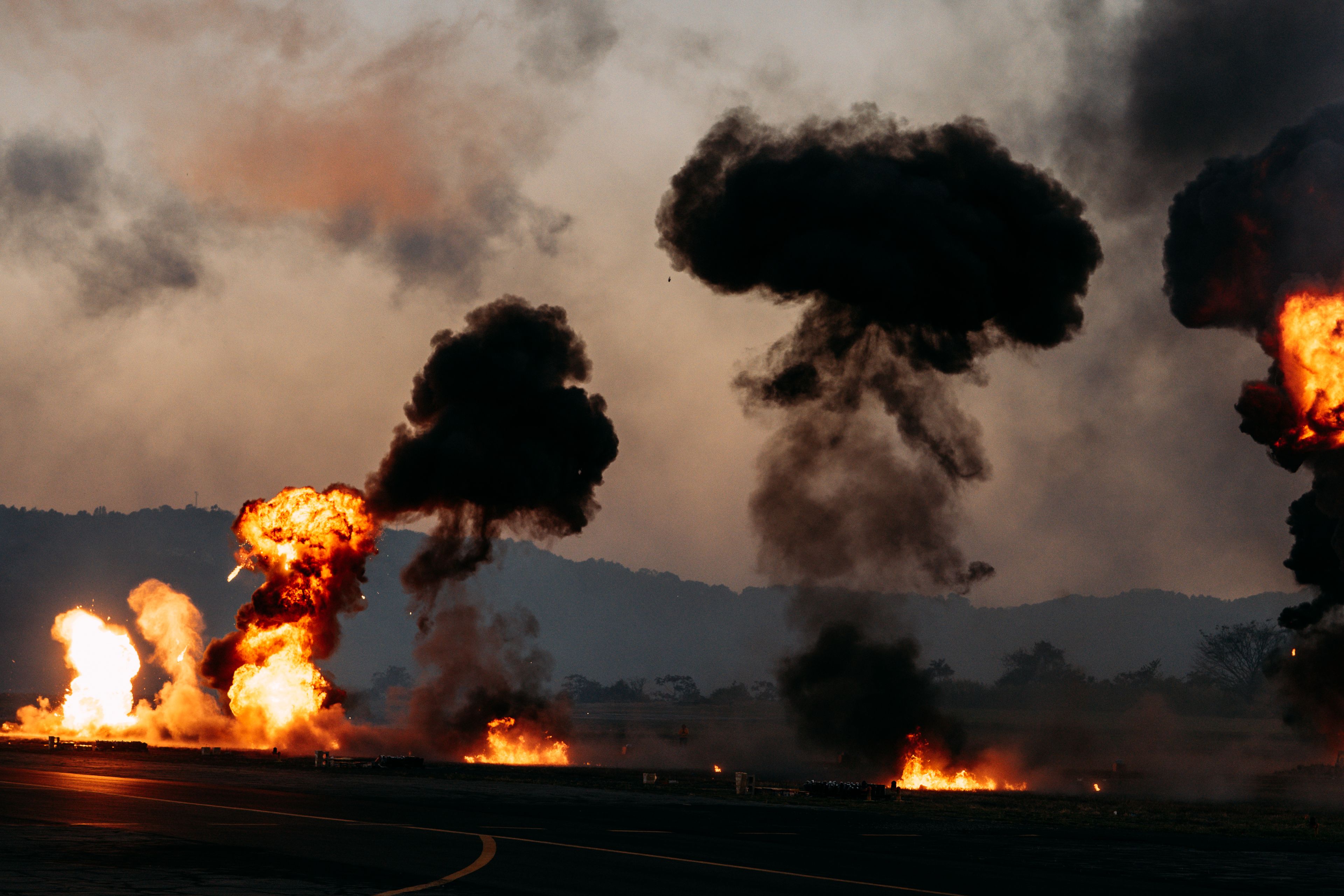
A massive blast at a fireworks factory in Liuyang, Hunan province rocked the town on May 4, 2026, flattening nearby buildings and sending thick smoke into the sky. State media and international outlets report dozens of casualties and an active investigation — but the story’s framing differs sharply across outlets.
Related coverage: Taiwan President's ‘Stowaway' Trip to Eswatini: Escape, Embarrassment, or Strategy?.
The Confirmed Facts
- A large explosion occurred on May 4, 2026, at a fireworks manufacturing site in Liuyang, Hunan province, China.
- State and international outlets report dozens of people killed or injured and emergency responders at the scene.
- Chinese authorities have ordered an investigation and local officials say rescue and accounting efforts are ongoing.
Four Newsrooms, Four Angles
According to Reuters (primary reporting from state and local agency sources), the blast at a Liuyang fireworks plant killed and injured dozens as emergency services rushed to contain the scene. Reuters’ coverage emphasizes official casualty figures and the prompt order from national leaders for a probe, presenting the incident largely as a sudden industrial accident and a test of emergency response.
According to the Associated Press, reporting draws heavily on state media briefings but also echoes on-the-ground rescue details and eyewitness accounts, which sometimes suggest higher casualty uncertainty and chaotic initial scenes. AP stresses the human toll and the sequence of rescue operations.
According to The New York Times, the piece situates the blast within a wider pattern: industrial safety lapses, supply-chain pressures, and local enforcement gaps that periodically produce major accidents. The Times emphasizes systemic causes and historical context for safety failures.
According to the BBC, local reporting highlights the immediate rescue response and community impact — civilians displaced, nearby homes damaged, and uncertainty about worker protections. The BBC frames it as both an emergency and a symptom of recurring safety problems in manufacturing hubs.
The Angles You Won't See on Page One
-
Local voices and worker-family accounts, which in similar past cases have raised questions about subcontracting, overtime, and informal workshops, are only sparsely quoted in the major agency pieces; these on-the-ground perspectives often point to chronic safety shortcuts rather than a single catastrophic mistake.
-
Regional regulatory records and small-language local outlets have previously documented that Liuyang — known as China’s fireworks capital — hosts many small suppliers that skirt safety rules through subcontracting. That structural background is more prominent in investigative reporting (e.g., longer-form pieces) than in initial wire coverage.
-
Economic pressure: analysts who track small-scale manufacturing note that global demand cycles and local competition can incentivize cost-cutting on maintenance and storage of volatile materials — a detail that explains why similar blasts recur beyond the official immediate causes.
Why the Gap Matters
Wire reporting — quick, authoritative, and necessary — correctly enumerates the casualties and official response. But there is a recurrent perspective gap between early agency copy, which centers the accident and official action, and the longer-term investigative view that locates such blasts within business model incentives, regulatory gaps, and informal labor practices.
Readers should register both: the immediate human tragedy (lives lost, families displaced) and the structural story (how localized production methods, subcontracting networks, and weak enforcement create repeating risk). The difference matters because policy responses driven by the first perspective prioritize rescue and short-term inspections, while the latter calls for systemic reform: labor protections, clearer accountability across supply chains, and investment in safer storage and manufacturing practices.
Sources & Further Reading
-
Reuters: primary reporting that tracks official casualty figures and government response.
-
Associated Press: on-the-ground rescue details and witness accounts.
-
The New York Times: contextual reporting on industrial safety and systemic causes.
-
BBC News: local impact reporting and community response.
-
Excerpt:* A massive explosion at a fireworks factory in Hunan killed and injured dozens — official accounts are clear on the immediate toll, but a fuller picture points to recurring safety and labor gaps that policy-makers often miss.
- china
- industrial-safety
- explosion
Related stories

China's Microdrama Boom: How A.I. Is Rewriting Entertainment — Jobs Lost or New Frontiers?
A fast churn of A.I.-generated microdramas is changing who gets paid in entertainment — and the choice to automate is as much economic as it is creative.
Read the story
Taiwan President's ‘Stowaway' Trip to Eswatini: Escape, Embarrassment, or Strategy?
A surprise visit by Taiwan's president to Eswatini has prompted contrasting narratives from Beijing, Taipei, and regional partners — and highlights how small-state diplomacy gets framed.
Read the story
The $25 Loophole Sending Wild Mustangs to Slaughter
A legal loophole lets the government sell protected mustangs for as little as $25. Coverage splits between an NYT investigation, BLM's flat denial, and advocates' data.
Read the story