
Illinois' Tuition Law for Undocumented Students Struck Down
A federal court ruled Illinois can't give undocumented students in-state tuition. It's the fifth state to lose that fight this year, with nine more pending.
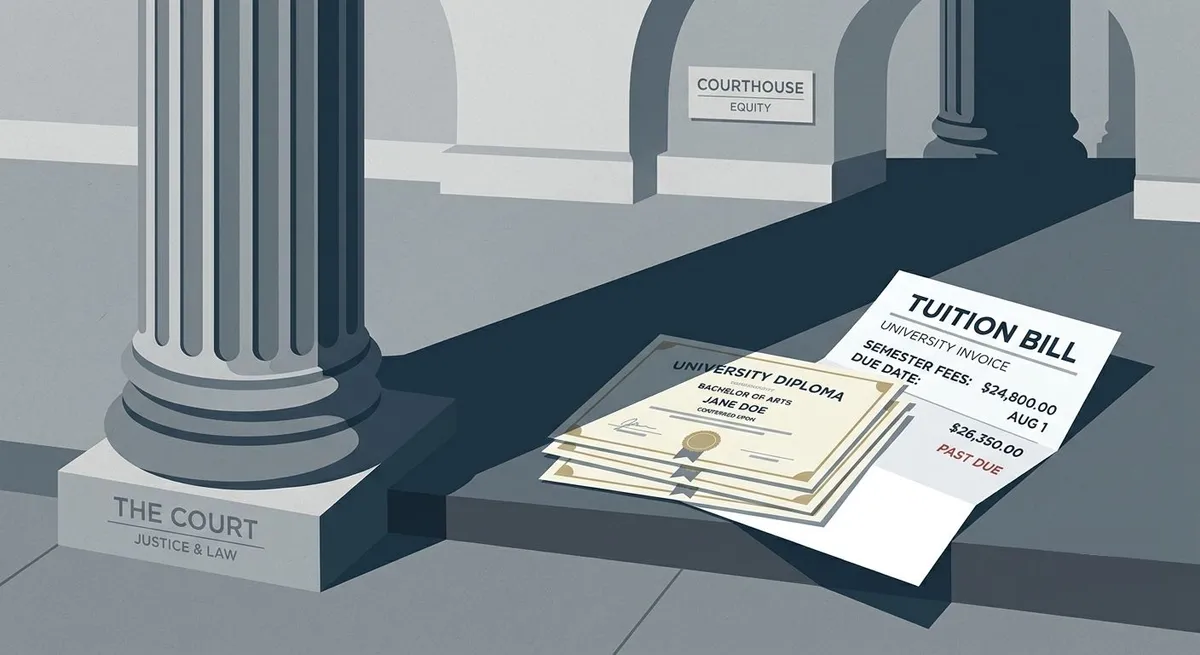
A federal court in Illinois has permanently blocked the state from letting undocumented students pay in-state tuition, closing out a case Gov. JB Pritzker's administration had actually defended in court rather than settling. The ruling landed Friday, and by Saturday every outlet covering it was leaning on the same one-page press release from the U.S. Attorney's office — with results that diverge more than you'd expect for a story with a single source document.
What the Court Actually Decided
The lawsuit dates to September 2025, when the Justice Department's Civil Division and the U.S. Attorney's Office for the Southern District of Illinois sued the state, Pritzker, Attorney General Kwame Raoul, and the boards of several public colleges, including the University of Illinois, Illinois State, Eastern Illinois, Chicago State, and Northeastern Illinois. The court held oral argument on May 5, 2026, then denied Illinois' motion to dismiss and granted the government's motion for summary judgment, according to the U.S. Attorney's own announcement, republished by Southern Illinois Now.
The ruling declares three things unconstitutional and invalid as applied to people not lawfully present: Illinois' general in-state tuition rules for public universities and community colleges, the RISE Act (which extends state financial aid to students ineligible for federal aid), and the Illinois DREAM Act and its scholarship program. The theory, per U.S. Attorney Steven Weinhoeft's statement, rests on 8 U.S.C. § 1623(a) — a 1996 federal law that bars states from granting residency-based education benefits to undocumented immigrants unless they extend the identical benefit to every U.S. citizen, regardless of home state. Illinois had not done that. The policy itself dates back to 2003 and required applicants to have graduated from an Illinois high school, attended one for at least three years, and pledged to seek permanent residency once eligible. The injunction is stayed for 14 days so the state can seek an emergency stay from an appeals court.
A Press Release, Not a Profile
Here's where the coverage gets interesting on its own terms. Fox News frames the ruling as a straight political scorecard entry — "another win for Trump administration" in a running series against blue states, complete with a quote from Rep. Mary Miller calling it a win for taxpayers. FOX 32 Chicago, reporting from inside the state, runs the same facts through a flatter "what we know / what we don't know" template and spends its final line noting that Pritzker's and Raoul's offices didn't respond to requests for comment. Southern Illinois Now doesn't add reporting at all — it reprints the U.S. Attorney's statement nearly verbatim, sourced entirely to the DOJ.
That layered relay produced a small but telling error. Fox News names the judge as Stephen McGlynn, a Trump appointee confirmed to the Southern District of Illinois in September 2020. FOX 32 Chicago names him as David W. Dugan — a different judge, on the same court, confirmed the very same week in 2020. The DOJ's own press release, tellingly, never names the judge at all; it refers only to "the Court" throughout. Two outlets, same ruling, same day, and neither agrees on who actually signed it. It's a small thing, but it's a useful tell for how much same-day court coverage is built on secondhand relay of a press release rather than the order itself.
The Other Nine States
The bigger story that gets flattened into a single line in most coverage is the pattern Illinois now belongs to. Since mid-2025, the DOJ has sued or settled with a growing list of states over the same statute: Texas and Oklahoma ended their laws quickly after state attorneys general sided with the federal government rather than defend them in court; Kentucky and Nebraska reached settlements. Illinois is the rare case that actually went to a contested ruling instead of a consent judgment, which is part of why it took nearly a year to resolve. A day before the Illinois decision came down, the DOJ filed the same claim against Colorado. Lawsuits remain pending against Minnesota, Virginia, California, New Jersey, Kansas, Massachusetts, Rhode Island, and Maryland — nine more states, all told, defending or preparing to defend the same 2003-era policy idea that once had bipartisan roots.
None of the July 25 coverage steps back to name that scale. Read any single article and Illinois looks like an isolated legal defeat for one governor. Read the pattern and it's a coordinated, multi-year campaign to unwind a specific category of state law nationwide — using a federal statute, 8 U.S.C. § 1623(a), that sat mostly unenforced for nearly three decades before this administration made it the centerpiece of a litigation strategy.
What Gets Left Out
The one outlet that supplies context none of the July 25 stories mention is Inside Higher Ed, reporting last November on how advocacy groups like MALDEF have responded to the earlier Texas and Oklahoma rulings. Their objection isn't really about the merits of the Supremacy Clause argument — it's that those cases were resolved through consent judgments between state and federal attorneys general, with no adversarial hearing and no chance for the roughly 27,600 undocumented students then enrolled in Illinois colleges, or their counterparts elsewhere, to argue in court. MALDEF has been trying, with mixed success, to intervene in those cases after the fact.
Illinois complicates that critique in a way none of the outlets covering Friday's ruling seem to notice: this state actually defended the law and got oral argument before losing. Whether that changes advocates' calculus, whether students already enrolled under the old rules have any transition protection, and whether the appeal succeeds within the 14-day window are all open questions no outlet asked anyone connected to the case. This isn't the first time this year a decades-old federal statute has quietly overridden a high-profile local promise — a 2002 law did much the same thing to New York's mayor-elect over an ICC arrest warrant. The pattern is becoming a genre: old statute, new enforcement priority, and a scramble to explain what it means for the people actually affected — who rarely make it into the first draft of the story.
Sources & Further Reading
- Court checks Pritzker as Trump administration scores another immigration win — Fox News
- Illinois giving undocumented immigrants in-state tuition rate is unconstitutional, judge says — FOX 32 Chicago
- Southern Illinois US Attorney Weinhoeft Announces Federal Court Victory Over Unconstitutional Illinois Sanctuary State Policy — Southern Illinois Now (U.S. Attorney's Office release)
- Undocumented Students, Advocates Intensify Defense of In-State Tuition Laws — Inside Higher Ed
- politics
- immigration
- education
- courts
- illinois
Related stories

ICE Tracked a Man for Months Over an Email It Won't Call a Threat
DHS agents tracked a Rochester man across three states over a scathing email to ICE's chief. In court filings, they still won't call it a threat.
Read the story
The $0 Tax Loophole That Just Gutted a 90-Year-Old Gun Law
A Texas judge voided NFA gun-registration rules after Congress zeroed the tax behind them. Outlets already disagree on what the ruling actually changes.
Read the story
Two Wives Warned About Him. ICE Hired Him Anyway.
After a fatal ICE shooting in Maine, DHS calls it one officer's vetting failure. Investigative reporting says it was the predictable result of a hiring surge.
Read the story