
The Texas Surrogacy Case Isn't Really About Abortion Anymore
A Dallas newborn's story got framed as abortion vs. life-saving care. Once he was born Wednesday, the real fight became who counts as his legal parent.
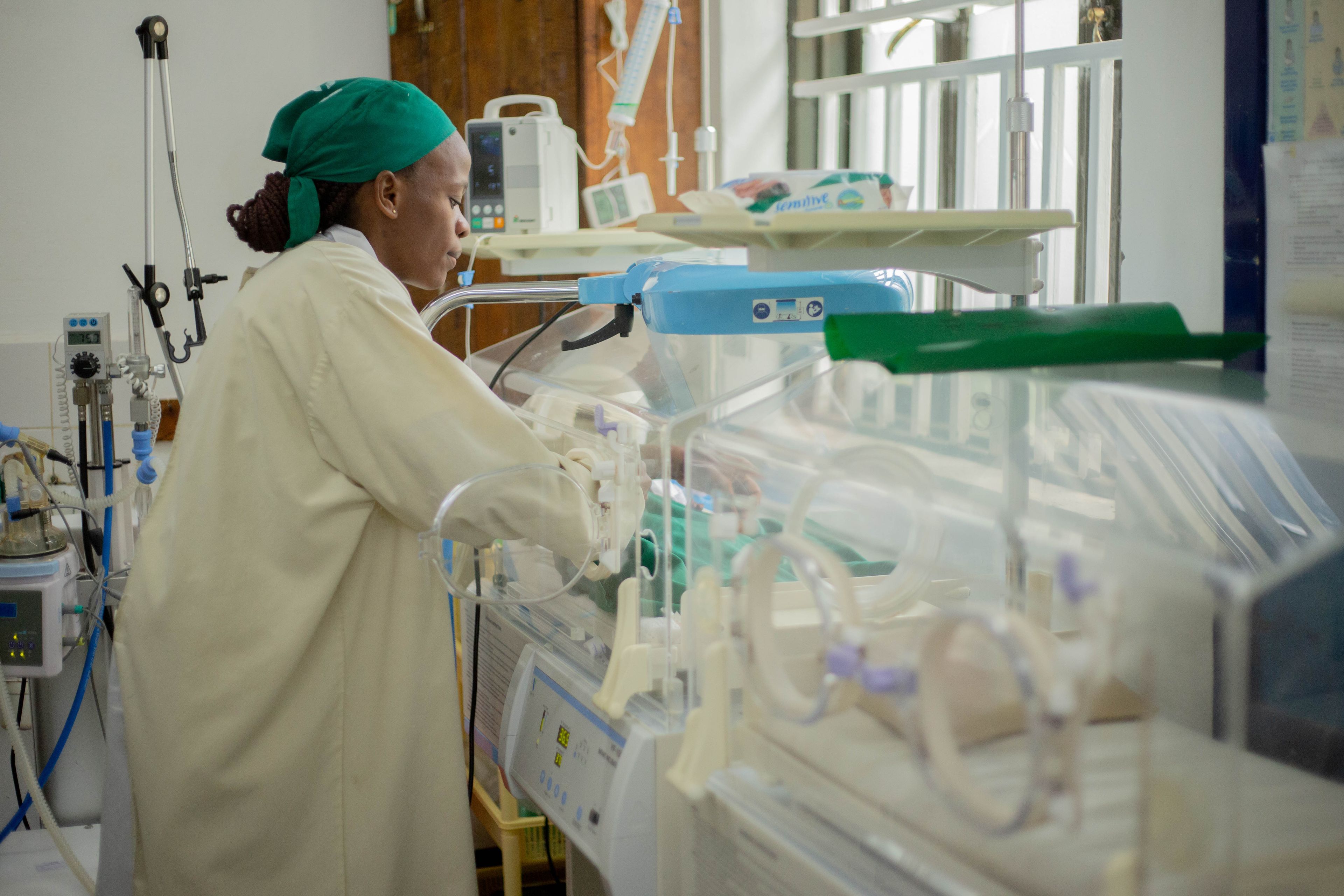
A baby boy was born in Dallas on Wednesday morning with a severe, treatable heart defect. Everyone involved agrees he needs staged surgery, starting within days. That's about the only thing everyone agrees on.
To Texas Attorney General Ken Paxton, the anti-abortion group that flew his surrogate mother to Texas, and outlets covering it as a disability-rights story, he's Baby Gabriel — a child nearly denied care because of his diagnosis. To his biological parents, Los Angeles couple Nausheen Gilkar and Omar Ahmed, he's Rumi — a child whose medical crisis was hijacked for a political fight neither of them started. Both descriptions get repeated as fact in different corners of the coverage. Neither one is actually the live legal question anymore.
Two names, two starting points
The surrogate, McKenna West, a nurse and single mother from Alaska, matched with Gilkar and Ahmed last August through a Connecticut surrogacy agency. At 20 weeks, doctors found hypoplastic left heart syndrome — the left side of the heart severely underdeveloped, requiring a series of three surgeries starting shortly after birth, according to the Associated Press. Everything since then is disputed.
West's attorney, Lincoln Wilson, told the Texas Tribune that Gilkar and Ahmed pressured West to end the pregnancy after the diagnosis, and that she refused because ending the life of the baby she was carrying felt "fundamentally offensive" to her. She cut off contact, withdrew medical releases, and eventually flew to Texas — a state where abortion is banned and where, under family law, whoever gives birth is the child's legal mother.
Gilkar and Ahmed's attorney, Lee Budner, disputes that account entirely. Court filings from the couple say West herself made the initial appointment to terminate and initially agreed with the decision before changing her mind. The couple say they'd already decided to continue the pregnancy and intended West to deliver in California, near the cardiac specialists who'd treat the baby long-term. Budner told CBS News the family is "devastated to see their family tragedy transformed into political theater by the Texas Attorney General's office and McKenna West."
The institutions that turned a birth into a headline
This case didn't stay a private medical dispute for long, and the reason is visible if you look at who showed up. Live Action, an anti-abortion advocacy group, paid for West's flight to Texas along with her two children, according to the AP. Alliance Defending Freedom, a conservative Christian legal organization, took on her representation. Texas Alliance for Life publicly applauded Paxton's intervention. And Paxton himself, mid-campaign for the U.S. Senate, personally announced he'd secured an emergency court order, declaring that "every child in our state deserves to be cared for and protected."
Then a second institutional actor entered from a different angle entirely: the Department of Health and Human Services. Its Office for Civil Rights sent Children's Medical Center of Dallas and UT Southwestern Medical Center a formal letter warning them not to withhold treatment from the baby based on his disability, urging an infant-care-committee review with continued treatment in the meantime, Fox News reported. That reframes the story again — not abortion politics, but disability-discrimination law, EMTALA-adjacent territory that outlives the pregnancy question entirely and gives the case a federal life of its own.
None of that institutional scaffolding appears if you only read the parents' side of the coverage, and none of the parents' rebuttal appears if you only read the advocacy groups' statements. Readers getting one feed or the other are getting a clean hero-versus-villain story. The actual picture is messier: an unresolved factual dispute about who wanted what, wrapped in a fast-moving alliance of state and federal power that assembled around one side within days.
What the Aug. 25 hearing will actually decide
Here's what most coverage buries: since the baby is already born, there is no more abortion to prevent or allow. That legal question is moot. What's left, and what a Dallas court will take up at a hearing scheduled for Aug. 25, is parentage — a question that predates this pregnancy by decades and has nothing to do with the heart defect.
A California trial court already ruled that Gilkar and Ahmed are the child's legal parents under their surrogacy contract; an appellate court rejected West's attempt to block that ruling. Maya Shulman, a California attorney who has handled surrogacy cases for 15 years, told the AP that a surrogate is not a parent under standard contract law, and that California courts would almost certainly enforce the agreement giving custody to the intended parents.
Texas law works differently. It recognizes whoever gives birth in the state as the legal mother — a rule written for a world where surrogacy across state lines wasn't common, now being tested as a possible end-run around a contract signed, and already litigated, somewhere else. West's legal team is explicit about the strategy: because she gave birth in Texas, they argue, Texas law — not California's — should control custody. That's the actual dispute the Aug. 25 hearing exists to resolve, and it's a far narrower, far more technical question than "should this baby live."
It's also a bigger one than this single case. If a Texas court accepts that giving birth inside its borders overrides a surrogacy contract executed and enforced elsewhere, that creates a template: any surrogate anywhere in a multi-state arrangement could, with the right legal and financial backing, relocate to Texas late in a pregnancy and reopen a custody question a home-state court already settled. That's a structural incentive the current coverage — focused on the abortion framing that made the story go viral — hasn't examined much at all.
Why the framing gap matters
The advocacy-driven coverage offers a resolved, satisfying story: a baby was almost denied care, the state stepped in, he'll live. That may all be true, but it also glides past a fact the parents' own filings raise and that reporters haven't fully pressed on either side — that West made and then canceled a termination appointment, a detail cited by both her own team and the couple's, just interpreted in opposite directions.
The parents'-side coverage, meanwhile, emphasizes the "political theater" framing without addressing why West left the arrangement in the first place, or fully engaging with her account of what was asked of her. And almost no one covering this as an abortion story mentions that Texas's birth-mother law, not the state's abortion ban, is what's actually before the court on Aug. 25.
This case sits alongside a broader pattern since Roe's reversal: state laws never designed for cross-border medical and reproductive arrangements are now being tested as tools in disputes that have nothing to do with their original purpose, from mail-order medication access — the subject of the Supreme Court's pending mifepristone case — to, now, birth-state parentage law. The baby at the center of this one will very likely be fine, medically. Whether Texas courts just opened a new venue for interstate custody disputes is the part nobody's headline is asking yet.
Sources & Further Reading
- What to know about surrogacy dispute between couple, their surrogate and Texas courts — Associated Press via ABC News
- Baby at center of surrogacy rights case is born in Dallas — The Texas Tribune
- Baby in surrogate dispute now in custody of parents and getting medical care, lawyer says — CBS News
- HHS warns Texas hospitals against denying life-saving care to newborn with disability — Fox News
- Attorney General Paxton Secures Emergency Court Order Ensuring Baby Gabriel Receives Life-Saving Care in Texas — Office of the Texas Attorney General
- texas
- abortion
- surrogacy
- law
Related stories

Supreme Court Asked to Restore Mifepristone Access: Science, Politics, and the Mail-Order Battle
A federal appeals court limited mail-order distribution of mifepristone; the drug maker has asked the Supreme Court to step in, exposing a clash between legal authority and public-health practice.
Read the story
ICE Tracked a Man for Months Over an Email It Won't Call a Threat
DHS agents tracked a Rochester man across three states over a scathing email to ICE's chief. In court filings, they still won't call it a threat.
Read the story
DFW Airport's Foot-Washing Controversy Wasn't as New as It Looked
DFW's plan for Islamic foot-washing stations went viral as something brand-new and privately funded. The airport says neither claim was accurate.
Read the story